
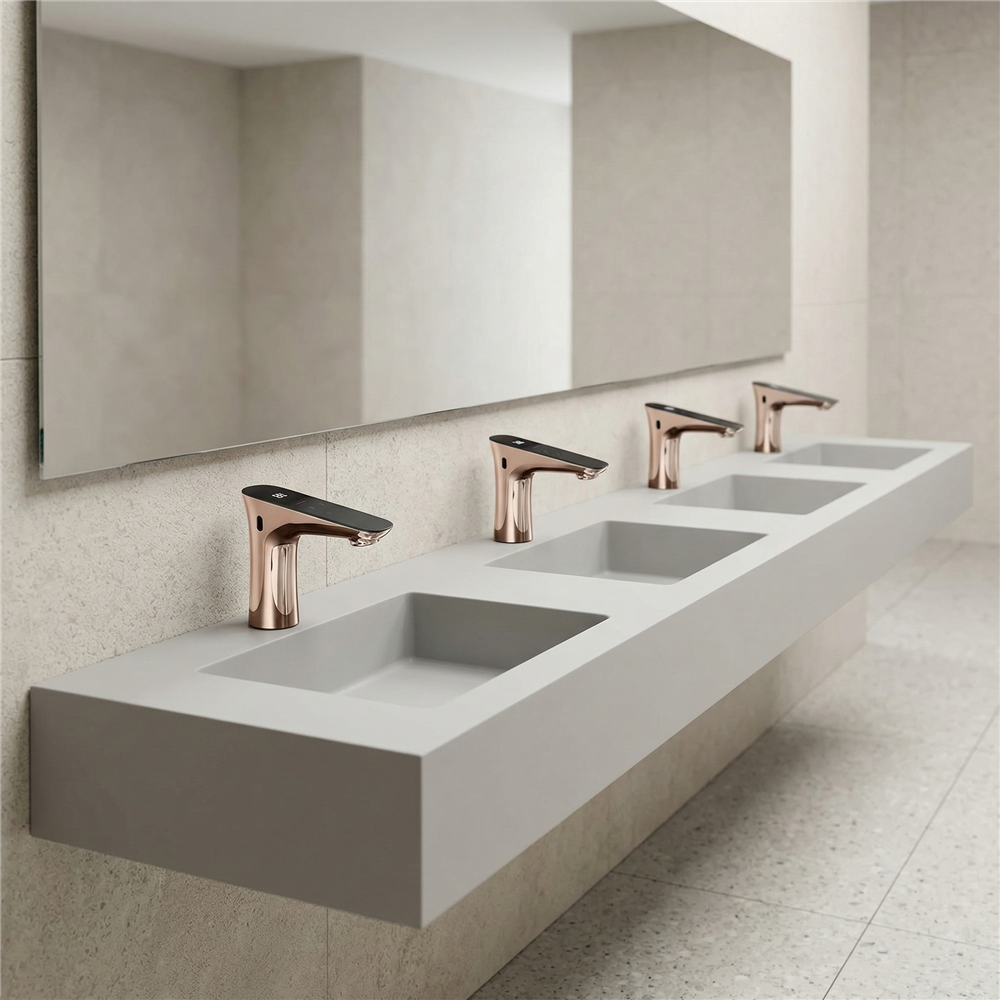
Touchless Faucets, Engineered for Real Commercial Projects
Commercial touchless faucets use sensor-activated controls to deliver water without manual handle contact, helping improve hygiene, control water use, and support high-traffic restroom operation. This guide explains how to evaluate sensor technology, flow rate, power architecture, basin compatibility, splash control, installation requirements, and long-term serviceability before specifying a touchless faucet for commercial or institutional projects.
Explore What We Provide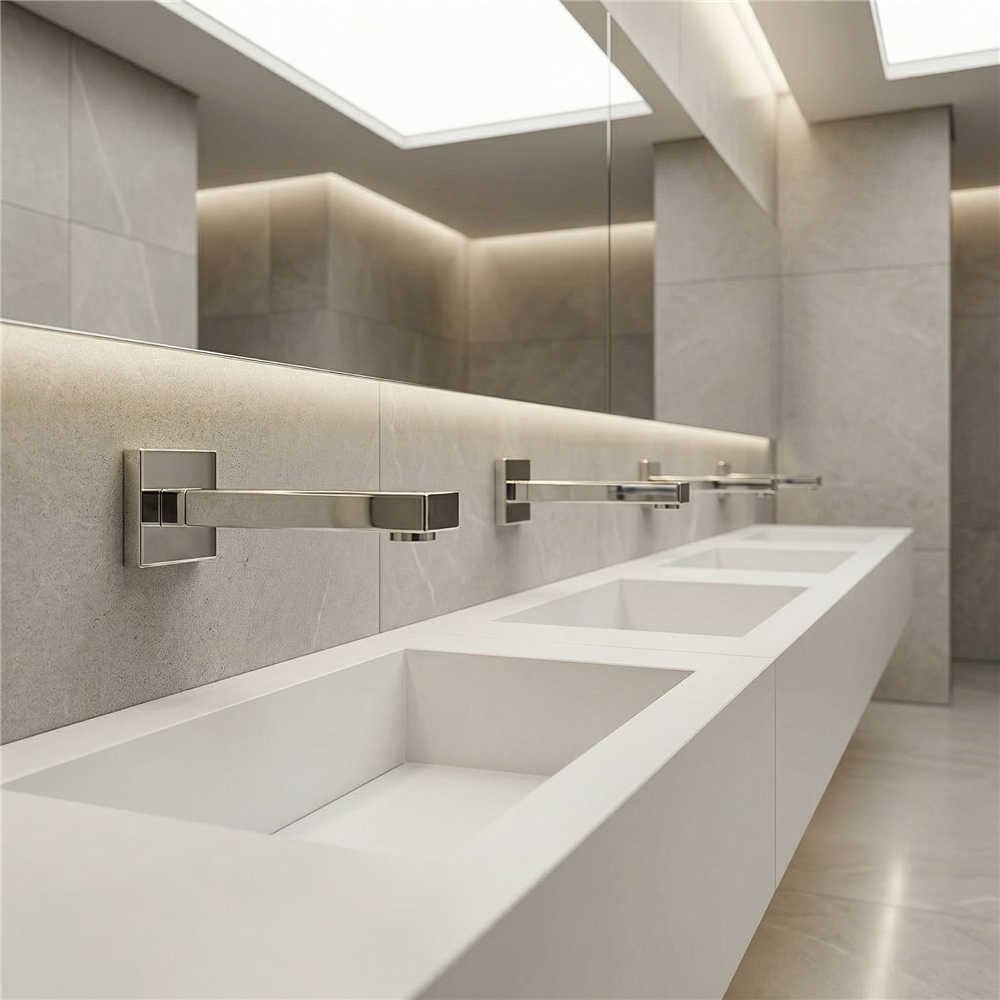
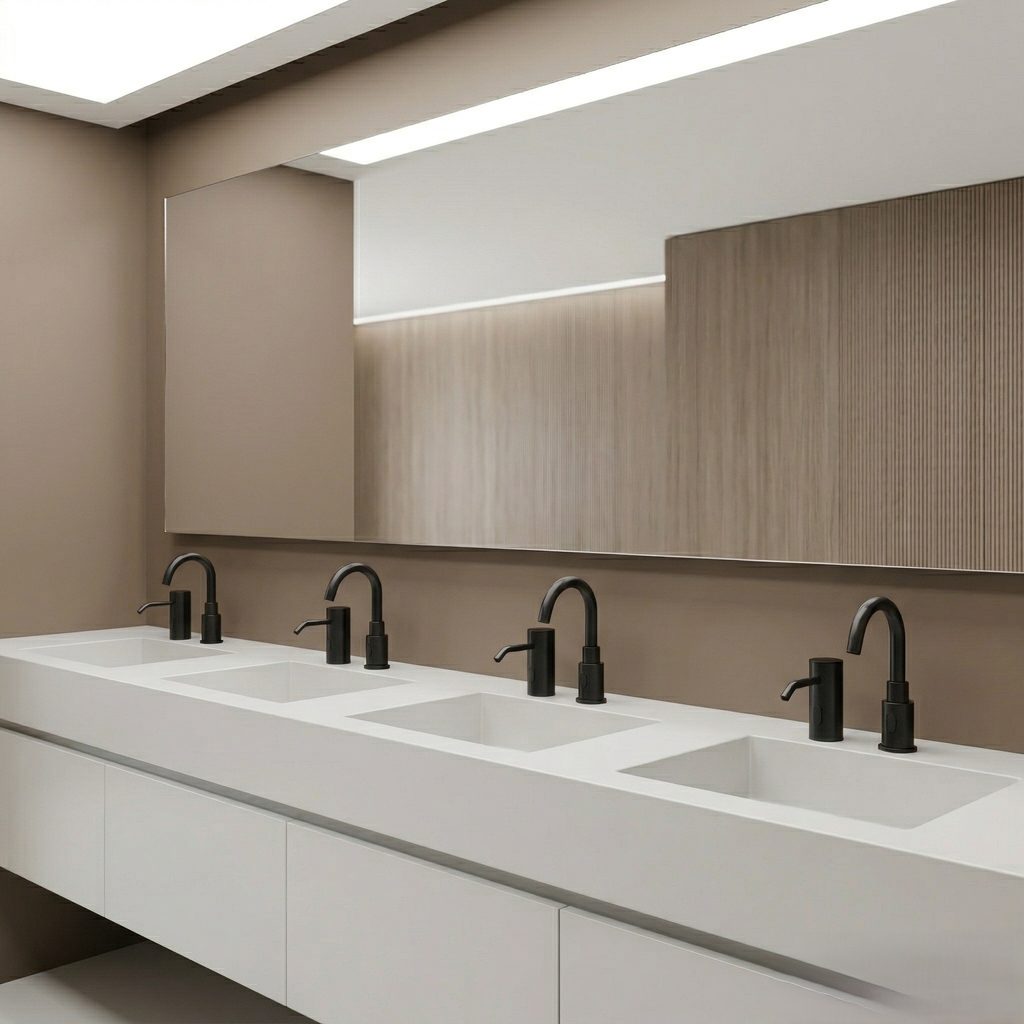
Commercial Touchless Faucets: Coordinate Reach, Sensor Field & Basin Geometry
Touchless faucet performance depends on more than the spout. Mounting location, finished-wall position, stream landing, reflective surfaces, splash control, and maintenance access should be resolved together.
Compare Mounting Strategies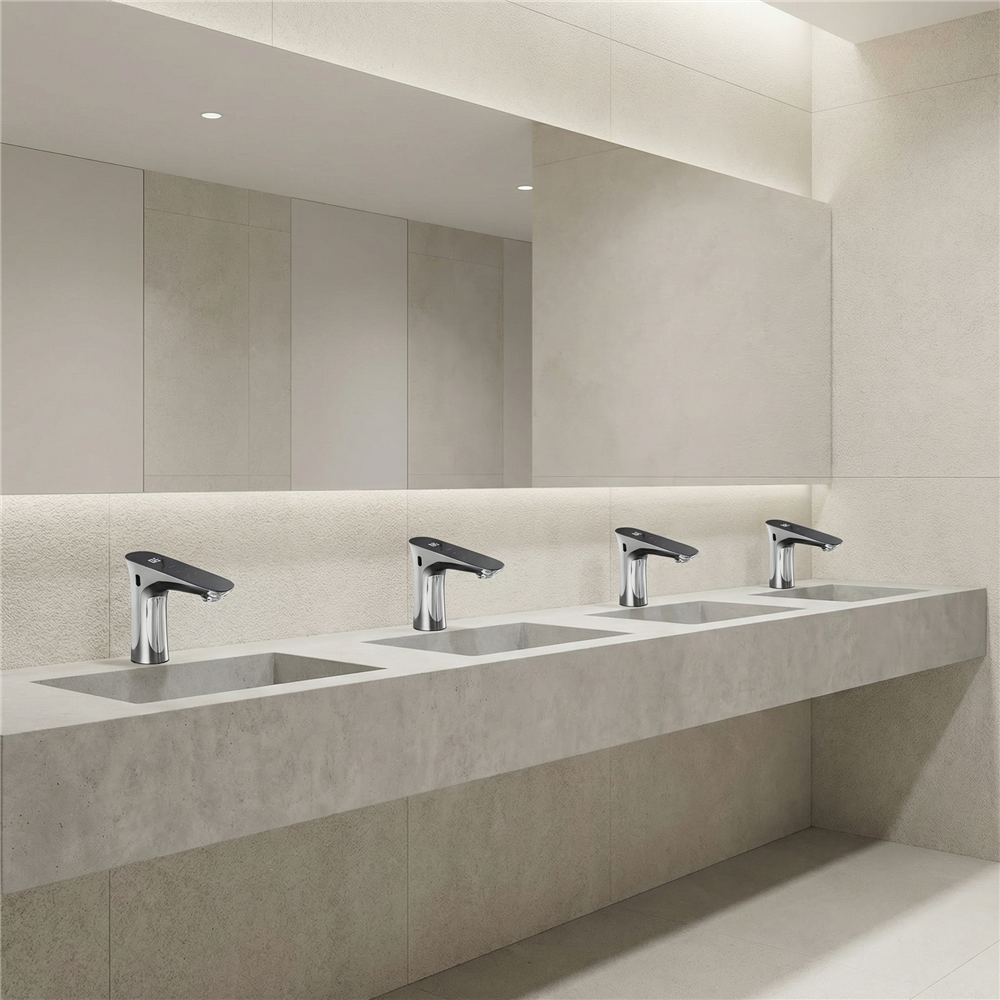
Battery, Hardwired, Hybrid, Solar & Hydropower Are Lifecycle Decisions
Power strategy affects rough-in, outage resilience, replacement labor, commissioning, and long-term maintenance. Compare the operating model before standardizing fixtures across a building or portfolio.
Review Power Architectures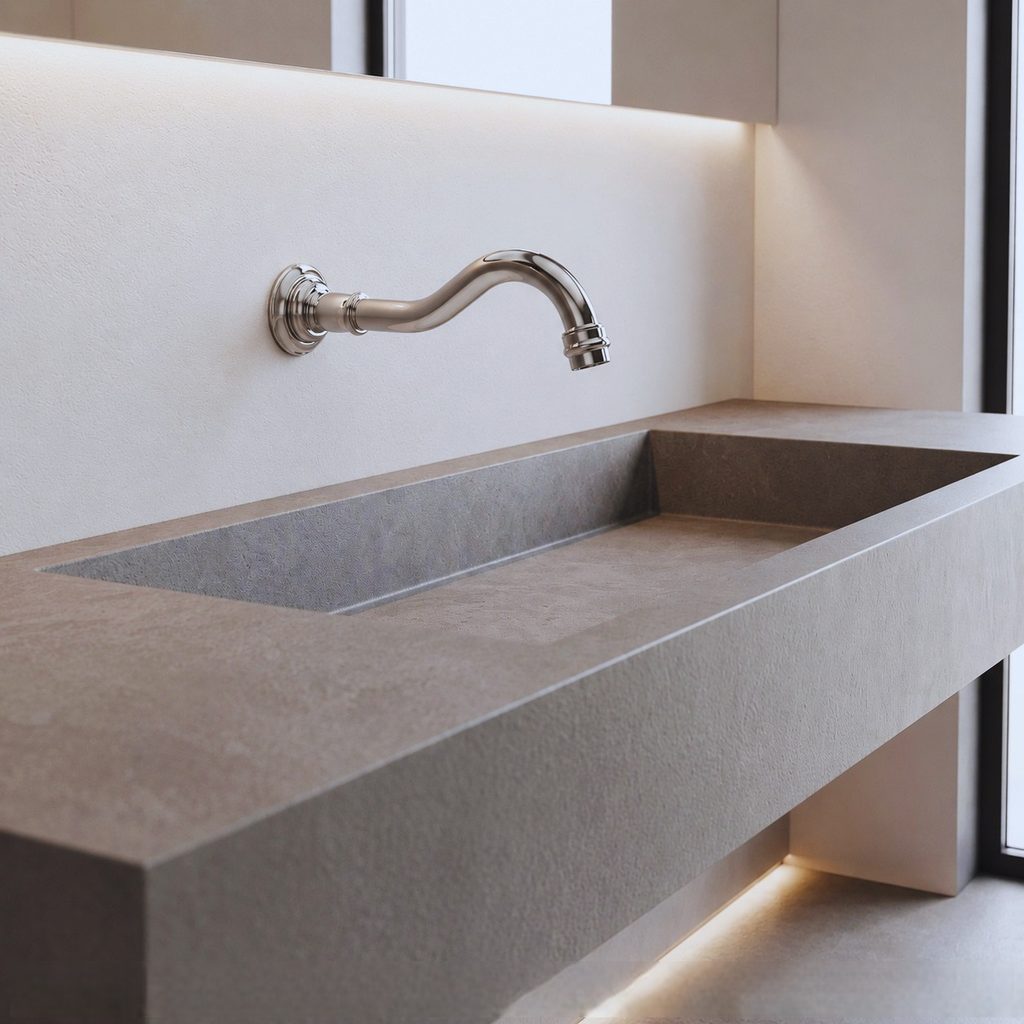
Evaluate the Faucet as Part of the Complete Healthcare Handwashing Station
Healthcare selection should consider sensor stability, basin and drain splash, flow, temperature control, filtration, flushing strategy, power, cleaning procedures, and rapid service access.
Open Healthcare Guide
Specify for Uptime, Repeatable Service & Long-Term Facility Performance
Airports, civic buildings, universities, stadiums, and other high-use facilities need dependable sensing, documented flow, robust construction, maintainable power systems, and predictable replacement components.
Public Facility Research Infrared Sensing
 Time-of-Flight
 Finish Coordination
 Service Access
High-Traffic Durability
Basin Geometry
Infrared Sensing
Time-of-Flight
Finish Coordination
Service Access
High-Traffic Durability
Basin Geometry
Service Access
High-Traffic Durability
Basin Geometry
Infrared Sensing
Time-of-Flight
Finish Coordination
Service Access
High-Traffic Durability
Basin Geometry
Commercial Touchless Faucets: Specification, Coordination & Lifecycle Performance
Commercial touchless faucets should be specified as complete electromechanical plumbing systems rather than as standalone spouts. Sensor type, solenoid and valve architecture, flow rate, power source, basin geometry, accessibility, temperature control, service access, and commissioning all influence real-world performance and lifecycle reliability.
For deeper specification research, see our commercial and public restroom touchless faucet comparison , building-type touchless restroom design guide , healthcare touchless faucet specification guide , and sensor faucet water-quality and maintenance guide .
Specify the Complete Touchless Faucet System, Not Only the Visible Spout
Sensor type, solenoid or valve architecture, power source, flow control, temperature strategy, filter access, mounting, and commissioning all influence real-world performance.
View Areas of Expertise
Wall-Mount vs. Deck-Mount Is a Coordination Decision Before It Is a Style Decision
Wall mounting can clear the countertop and support custom basin design, while deck mounting usually simplifies retrofit work and replacement. Both require deliberate stream-landing and service planning.
Compare Wall & Deck Mount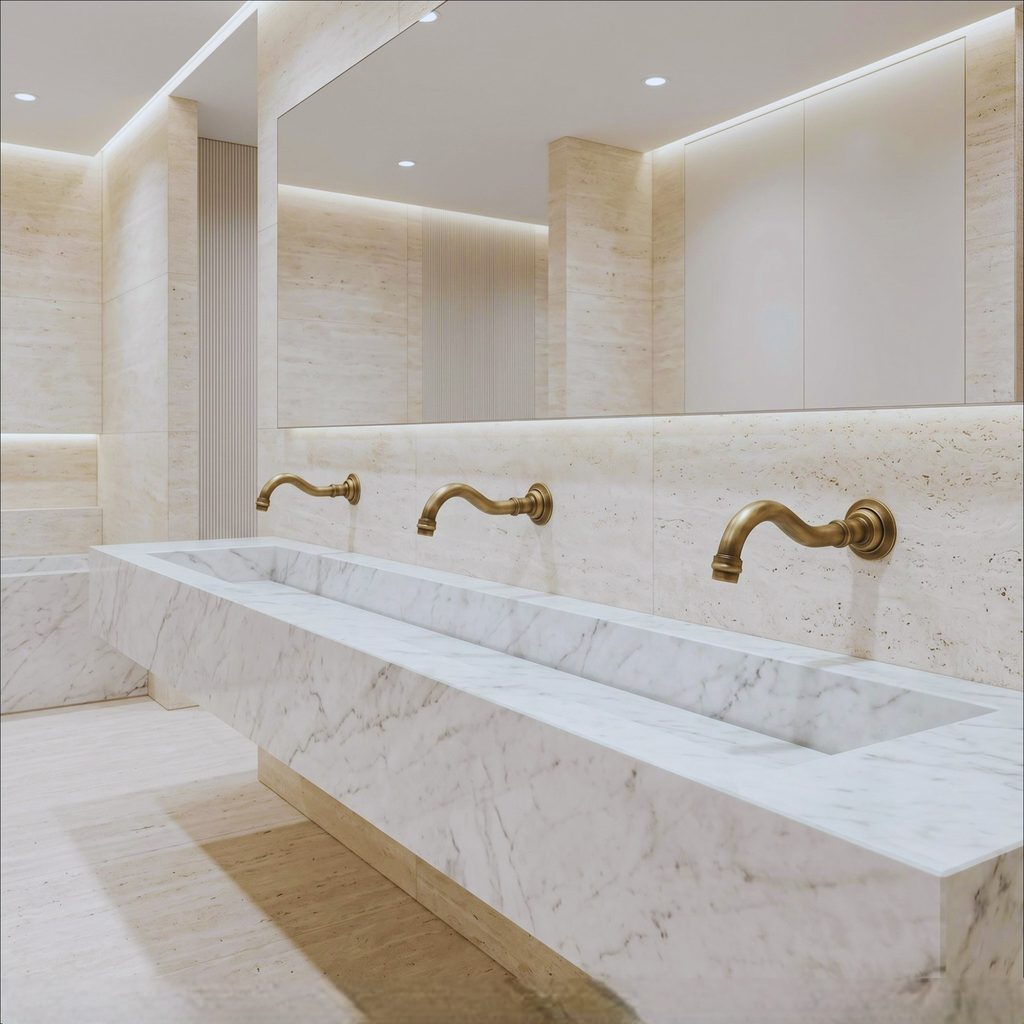
Hard Water, Sediment & Scale Can Become Sensor-Faucet Reliability Problems
Mineral buildup and debris can affect aerators, strainers, valves, sensing behavior, and perceived flow. Maintenance planning should address water quality before recurring service calls become normal.
Read Water-Quality GuideTouchless Faucet Engineering, From Detection to Lifecycle Service
Specification decisions should connect sensor reliability, power architecture, basin geometry, water quality and maintenance strategy. For model-level comparison, review our commercial touchless faucet comparison and our restroom design guide by building type .
Detection & Control Logic
Review infrared, proximity, and advanced sensing behavior, including range, response, false activation, shutoff timing, and interaction with reflective restroom surfaces.
Sensor research →
Battery vs. Hardwired
Compare battery, AC, hybrid AC/DC, solar-assisted, and hydropower strategies by installation complexity, outage behavior, technician labor, and lifecycle maintenance.
Compare power systems →
Faucet-to-Basin Coordination
Study spout projection, mounting elevation, basin depth, drain position, stream landing, finished-wall thickness, and access before releasing millwork or stone fabrication.
Mounting guide →
Water Management & Serviceability
Evaluate sensing, splash, temperature control, filtration, purge functions, power, cleaning, and commissioning as part of the complete healthcare handwashing station.
Healthcare research →
Water Quality & Maintenance
Account for strainers, mineral buildup, aerator service, cleaning chemistry, sensor-lens care, replacement access, and component standardization across the facility.
Maintenance research →One Sensor Faucet Strategy Does Not Fit Every Building Type
Traffic, basin design, water-management goals, housekeeping practices, electrical infrastructure, and service capability change the specification priorities from one facility type to another.
Coordinate sensor behavior, basin splash, water management, filtration, temperature control, cleaning, and rapid maintenance access.
Healthcare guide →
Airline and compact lavatory applications bring tighter envelopes, low-voltage power, ingress protection, and precise sensing into the same design problem.
Building-type design guide →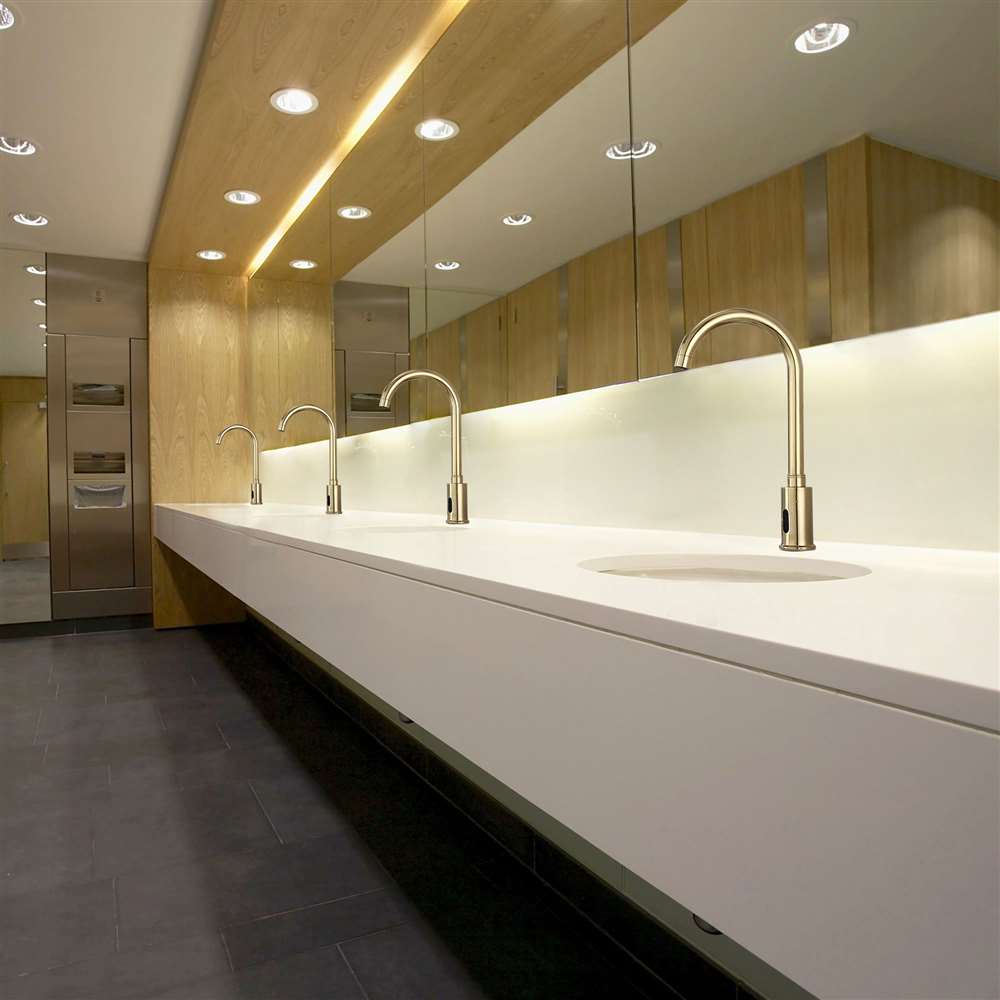
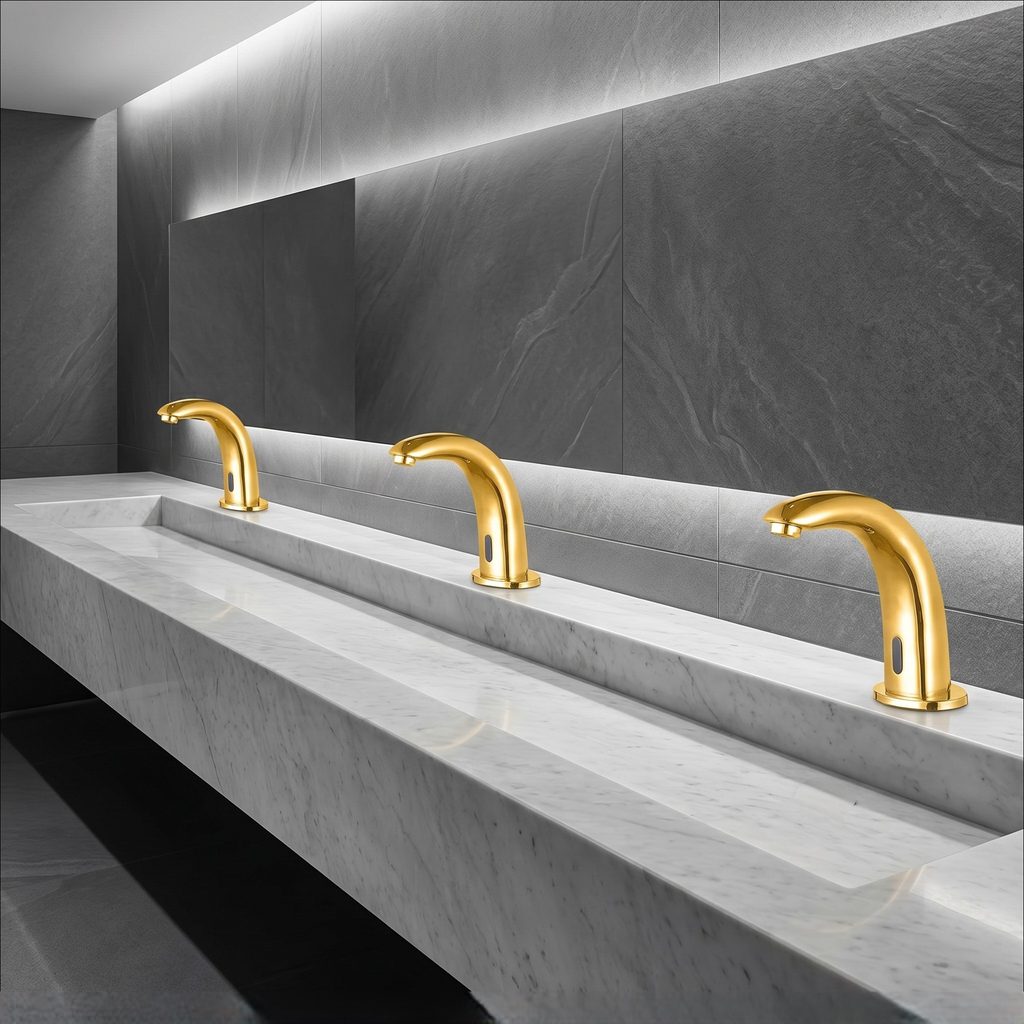
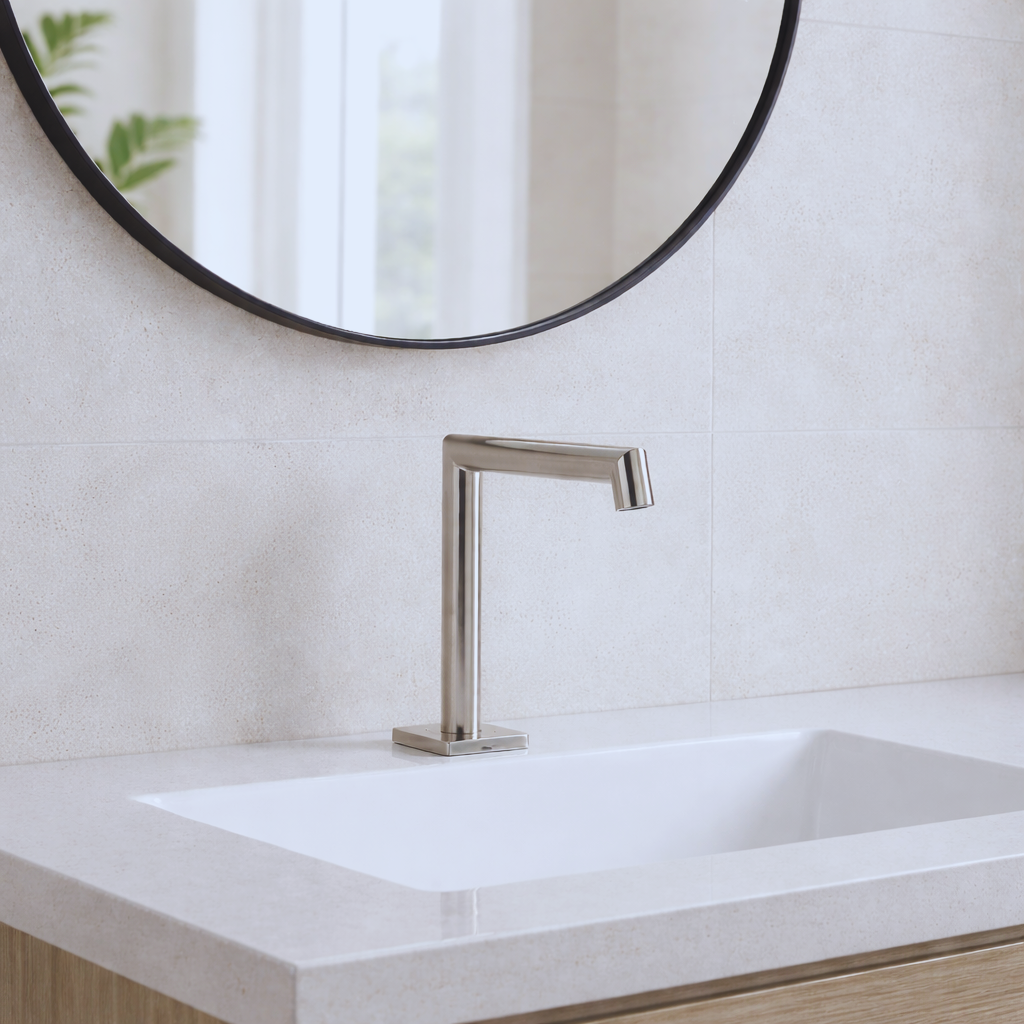
Gold, matte black, brushed nickel, and chrome create different visual outcomes, but service access and finish-care requirements still govern lifecycle performance.
Hospitality finish guide →
Public-sector projects benefit from repeatable platforms, clear technical data, durable construction, accessible parts, and predictable maintenance procedures.
Public-facility comparison →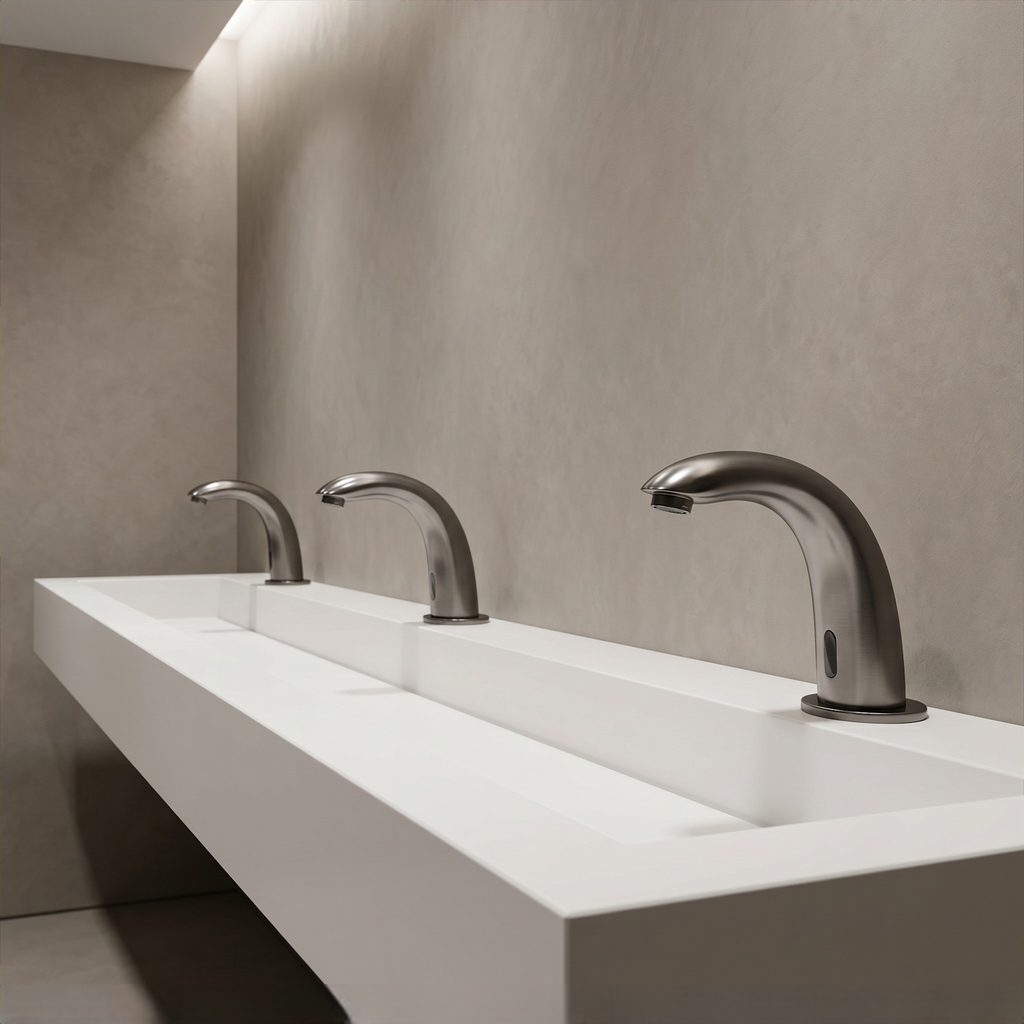
Automatic faucets can reduce normal handle contact, but sensors, power supplies, and electronic valves introduce service components that should be planned from day one.
Touchless vs. manual →Engineering Comparisons for Real Touchless Faucet Decisions
Use the rotating guide library to compare sensing and manual operation, power systems, mounting strategies, healthcare requirements, hospitality finishes, water quality, and major commercial faucet platforms.
Touchless Faucets vs. Manual Faucets
Compare user contact, automatic water shutoff, electrical requirements, mechanical simplicity, accessibility, service components, and lifecycle trade-offs.
Read comparison →
Battery vs. Hardwired Touchless Faucets
Evaluate AC, DC, hybrid, solar, hydropower, and long-life battery approaches according to rough-in, outage resilience, replacement labor, and lifecycle operation.
Power-system guide →
Wall-Mount vs. Deck-Mount Touchless Faucets
Compare rough-in precision, counter cleaning, retrofit flexibility, spout projection, basin compatibility, finished-wall constraints, and future replacement access.
Installation guide →
Touchless Faucets for Healthcare & Medical Facilities
Review sensor stability, splash control, stagnation management, filtration, temperature control, purge functions, power architecture, and commissioning.
Healthcare guide →
Touchless Faucets for Luxury Hotels & Resorts
Compare brushed gold, matte black, brushed nickel, and chrome through both architectural design and long-term housekeeping and replacement considerations.
Hospitality guide →
How Hard Water & Sediment Affect Sensor Faucets
Understand how mineral accumulation, debris, strainers, aerators, cleaning, and local water conditions can change flow quality and maintenance demand.
Water-quality guide →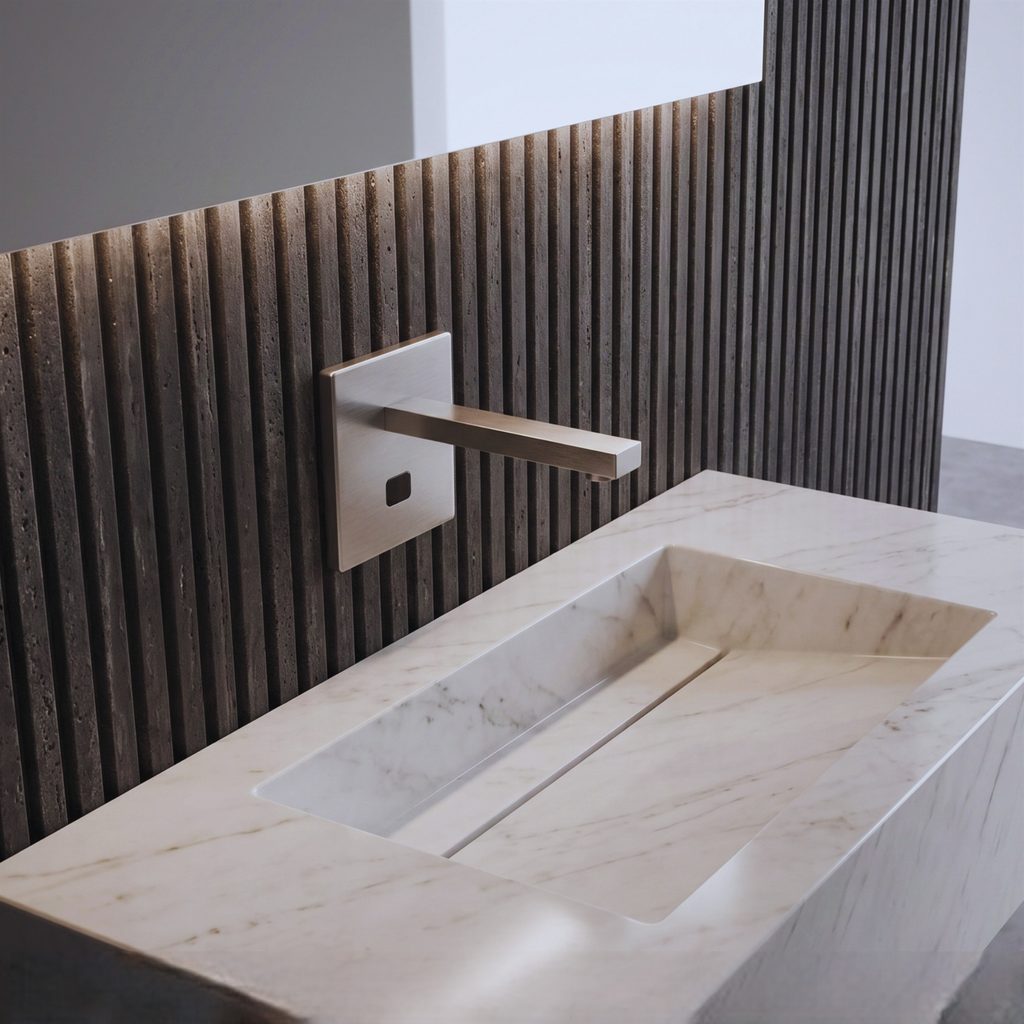
Leading Bathroom Touchless Faucet Brands
Review major commercial touchless platforms and the specification factors that matter more than a brand name alone: sensing, flow, power, documentation, and service access.
Explore faucet brands →Commercial Touchless Faucet Specification Comparison
Touchless faucets should be compared as complete plumbing-and-control systems. Sensor behavior, power architecture, faucet geometry, basin coordination, water use, and future service access can materially affect performance after installation.
| Specification Factor | What to Verify | Why It Matters | AEC Coordination Risk |
|---|---|---|---|
| Sensor Architecture | Detection range, response behavior, false activation resistance, shutoff timing and field adjustment. | Poor sensing can produce missed activations, unintended flow, nuisance cycling or inconsistent user experience. | Reflective basins, mirror surfaces, lighting and mounting geometry may affect commissioning. |
| Flow Rate | Published GPM, outlet type, operating pressure and project-specific efficiency requirements. | Flow influences water use, handwashing experience, splash and compatibility with basin geometry. | Public lavatory faucets should be evaluated separately from private lavatory WaterSense products. |
| Power Architecture | Battery, hardwired AC, hybrid AC/DC, self-generating options and power-failure behavior. | Power choice affects rough-in, maintenance labor, outage resilience and fleet-wide operating strategy. | Electrical coordination and access may need to be resolved before countertops and casework are finalized. |
| Spout & Basin Geometry | Reach, outlet height, stream landing point, basin depth and drain position. | Correct coordination reduces splash and improves comfortable hand clearance. | Late fixture substitutions can invalidate stone, millwork or basin coordination. |
| Accessibility | Lavatory height, clear floor space, knee/toe clearance and operable controls. | Accessible fixture selection must coordinate the faucet with the complete lavatory. | A compliant faucet alone does not make the lavatory installation accessible. |
| Service Access | Filters, solenoid, battery pack, transformer, mixing device and replaceable controls. | Serviceability affects downtime, technician labor and lifecycle maintenance. | Concealed equipment should remain accessible after casework and finishes are complete. |
Commercial Touchless Faucet Pre-Specification Checklist
Use this checklist before releasing plumbing fixture schedules, millwork, countertops or electrical coordination drawings.
Sensor & Controls
- Confirm sensor technology and adjustable range.
- Review activation and automatic shutoff behavior.
- Consider reflective basin and countertop surfaces.
- Confirm control-module location and commissioning access.
Hydraulic Performance
- Confirm published flow rate and operating-pressure range.
- Coordinate stream landing with basin depth and drain position.
- Review supply filtration or strainer requirements.
- Confirm temperature-control strategy.
Power & Electrical
- Select battery, hardwired or hybrid architecture.
- Verify transformer or power-supply location.
- Confirm access for battery or electronic service.
- Review expected behavior during a power interruption.
Accessibility
- Coordinate lavatory clear floor space and approach.
- Verify knee and toe clearance.
- Confirm lavatory or counter height.
- Check controls against applicable accessibility requirements.
Installation & Service
- Verify deck hole or wall rough-in location.
- Confirm spout reach before releasing stone or millwork.
- Provide access to solenoid, filters and electronics.
- Record replacement components in project closeout documents.
Commissioning
- Flush piping before final fixture commissioning.
- Test sensor activation from normal user positions.
- Verify flow, temperature and splash behavior.
- Document final sensor settings and maintenance access.
How to Specify a Commercial Touchless Faucet in 7 Steps
A reliable touchless faucet specification starts with the application and basin, then works backward through sensing, hydraulics, power, accessibility and lifecycle service.
1. Define the building and traffic profile
Identify whether the faucet will serve an office, airport, school, healthcare facility, hospitality project or other high-use environment. Traffic, cleaning practices and maintenance staffing influence the appropriate sensor, power and service strategy.
2. Coordinate the faucet with the basin
Check spout reach, outlet elevation, basin depth, drain position and expected stream landing. The stream should enter the usable basin zone without striking the drain or producing avoidable splash.
3. Establish the required flow strategy
Verify applicable project and plumbing-code requirements before selecting outlet flow. For public lavatory applications, review current EPA guidance and applicable local efficiency requirements. Review EPA public-lavatory faucet guidance .
4. Select sensor and power architecture
Coordinate sensing technology with reflective surfaces and expected user positions, then select battery, hardwired or hybrid power according to electrical rough-in, maintenance capability and expected fixture count.
5. Verify accessibility as a complete lavatory system
Review clear floor space, knee and toe clearance, lavatory height and controls rather than evaluating the faucet independently. ADA Section 606 addresses lavatories and sinks, while Section 309 addresses operable parts. U.S. Access Board lavatory guidance .
6. Plan service access before finishes are released
Locate batteries, transformers, solenoids, filters and mixing components where maintenance staff can reach them without removing permanent finishes or dismantling unrelated building components.
7. Commission the faucet and basin together
Test activation range, flow, temperature, automatic shutoff, stream landing, splash and service access under actual operating conditions. Record final settings and maintenance information for turnover to the facility team.
Commercial Touchless Faucet Standards & Accessibility References
Use these primary references when coordinating commercial touchless faucet accessibility, plumbing performance and water-efficiency requirements. Always verify the edition adopted by the applicable project jurisdiction.
ADA Standards for Accessible Design
- Coordinate lavatory and sink requirements with the complete fixture assembly.
- Review clear floor space, knee clearance and toe clearance.
- Verify lavatory height and accessible approach conditions.
- Evaluate faucet controls and operable parts together with the lavatory.
ASME A112.18.1 / CSA B125.1
- Reference applicable requirements for plumbing supply fittings.
- Verify product documentation against the current published standard.
- Confirm manufacturer testing, certification and listed performance data.
- Coordinate faucet selection with project plumbing-code requirements.
EPA WaterSense Faucet Guidance
- Review faucet flow-rate requirements for the intended application.
- Distinguish public lavatory applications from residential WaterSense products.
- Coordinate flow rate with basin geometry and splash performance.
- Verify current EPA guidance before establishing project efficiency criteria.
Commercial Touchless Faucet FAQs
Technical questions architects, engineers, specifiers and facility teams should consider when selecting and commissioning sensor-activated faucets.
What should architects evaluate before specifying a commercial touchless faucet?
Review sensor type and range, flow rate, power architecture, spout reach, basin geometry, splash behavior, temperature control, service access and commissioning requirements. For a broader model-level comparison, see the commercial and public restroom touchless faucet guide .
Is battery or hardwired power better for touchless faucets?
Battery systems simplify many retrofit installations, while hardwired or hybrid systems can reduce recurring battery replacement across larger fixture fleets. The decision should consider electrical rough-in, outage behavior, maintenance labor and lifecycle cost. See the battery vs. hardwired touchless faucet guide .
How does basin geometry affect touchless faucet performance?
Spout projection, outlet height, basin depth, drain location and sensor field all affect where the stream lands and whether splash occurs. These variables should be coordinated before millwork or stone is released. See the wall-mount vs. deck-mount touchless faucet guide .
Are touchless faucets appropriate for healthcare facilities?
They can reduce routine contact with faucet handles, but healthcare specification also requires attention to water management, splash, filtration, temperature control, purge strategy, cleaning and rapid service access. Review the healthcare touchless faucet specification guide . For healthcare sink planning, see the CDC water-management guidance for healthcare facilities .
Can hard water or sediment affect sensor faucet reliability?
Yes. Mineral buildup and debris can affect aerators, strainers, solenoid passages, flow quality and maintenance frequency. Water-quality conditions should therefore be considered as part of the fixture service plan. See the touchless faucet water-quality maintenance guide .
Do all commercial buildings need the same touchless faucet specification?
No. Airports, healthcare facilities, hotels, offices and civic buildings can have very different traffic levels, cleaning practices, water-management goals, electrical infrastructure and maintenance capabilities. Compare these differences in the commercial restroom design guide by building type .
What should be checked during touchless faucet commissioning?
Verify sensor activation range, response consistency, shutoff timing, flow, water temperature, stream landing, splash behavior, power-failure behavior and access to filters, valves and electronics. Commissioning should confirm the complete faucet-and-basin system rather than the sensor alone. For accessibility-related checks, verify the ADA Standards for Accessible Design .
Specification
Commissioning
 Accessibility
Water Efficiency
Water Management
Lifecycle Maintenance
Specification
Commissioning
Accessibility
Water Efficiency
Water Management
Lifecycle Maintenance
Accessibility
Water Efficiency
Water Management
Lifecycle Maintenance
Specification
Commissioning
Accessibility
Water Efficiency
Water Management
Lifecycle Maintenance
How Bath Touchless Faucets Evaluates Technical Information
Bath Touchless Faucets reviews manufacturer documentation, published technical data, applicable plumbing and accessibility references, installation requirements, and facility-performance considerations when preparing research content. Product claims, flow rates, certifications, power requirements, and installation details should be verified against current manufacturer documentation and the requirements of the applicable project jurisdiction before specification.
Our research is intended to support technical evaluation rather than replace project-specific engineering, code review, or manufacturer verification. Manufacturer claims are treated as product-source information and are compared with applicable standards, installation documentation, accessibility guidance, and facility-operation considerations where relevant.
Learn more about the site on our About page , review who the research is intended for , and see why touchless faucet performance matters .