
0.35 vs. 0.5 GPM Touchless Bathroom Faucets: Which Flow Rate Is Better?
A 0.35 GPM touchless faucet uses 30% less water than a 0.5 GPM faucet when both run for the same amount of time. But that does not automatically make 0.35 GPM the better fixture. Stream distribution, outlet design, pressure compensation, basin geometry and sensor runtime determine whether low flow still feels effective at the sink.
0.35 GPM vs. 0.5 GPM
Best for aggressive water-reduction targets and high fixture-count commercial buildings.
Strong public-lavatory baseline balancing efficiency with fuller perceived water delivery.
0.35 GPM uses 30% less water during identical faucet runtime.
Five Low-Flow Touchless Bathroom Faucet Platforms
| Product | Flow Strategy | Best Application |
|---|---|---|
| Fontana Glacier Series Touchless Faucet | 0.35–0.5 GPM | Premium commercial low-flow projects |
| BathSelect Chrome Commercial Sensor Faucet | 0.5 GPM optional | General public restrooms |
| Sloan Optima EAF-200 | 0.35 GPM | Institutional ultra-low-flow projects |
| KOHLER Composed | 0.35 GPM | Design-forward low-flow bathrooms |
| American Standard Innsbrook Selectronic | 0.5 GPM | Modular commercial specification |
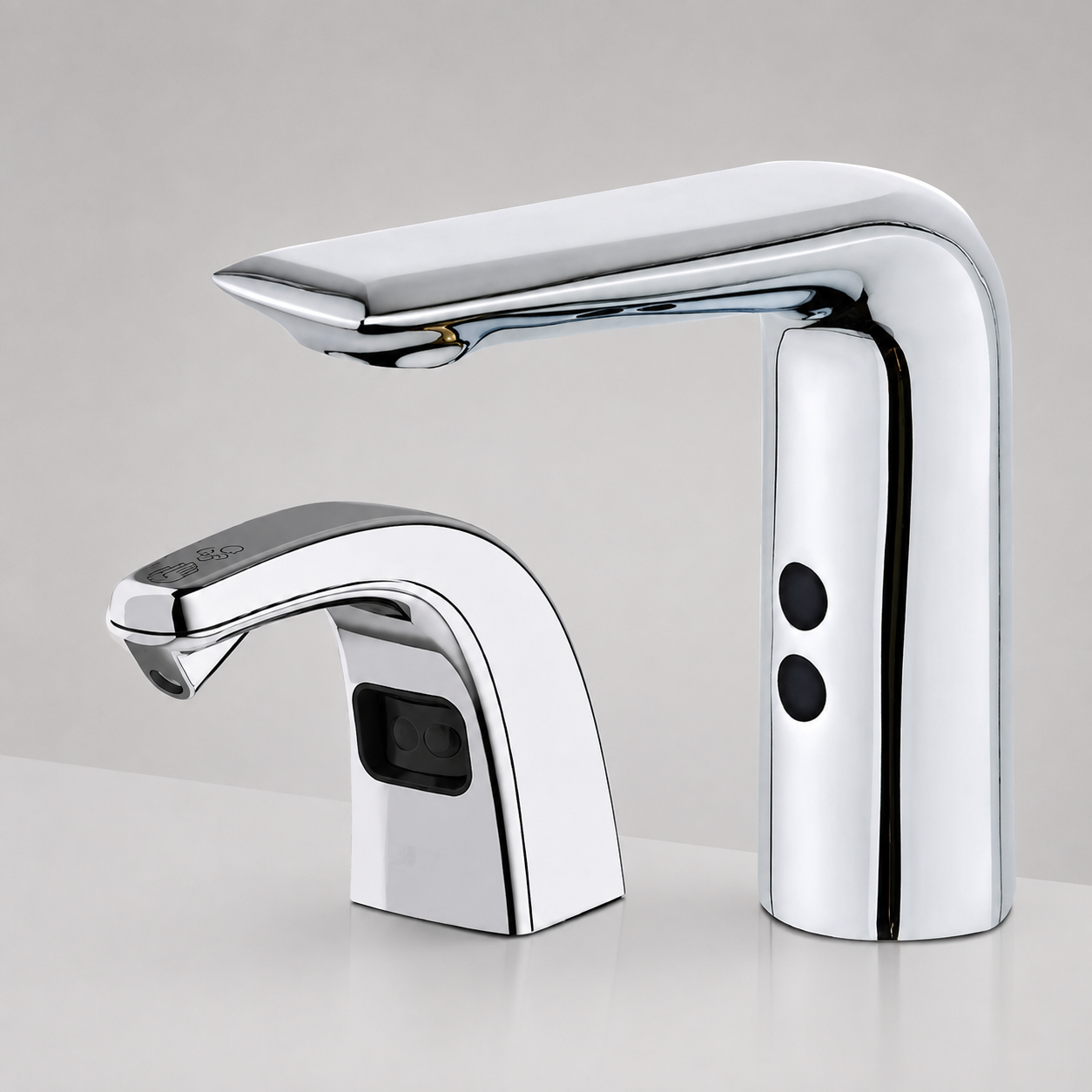
Fontana Glacier Series Chrome & Polished Metal Touchless Faucet
The Fontana Glacier Series Touchless Faucet gives specification teams the flexibility to work within both 0.35 and 0.5 GPM water-efficiency strategies rather than locking the project into one flow class.
Fontana publishes a laminar low-splash outlet, infrared activation, brass manifold, ceramic cartridge and expected service life above 500,000 operating cycles.
One commercial architecture can support both standard low-flow and aggressive conservation targets.
Select the final outlet before commissioning rather than changing flow strategy after occupancy.
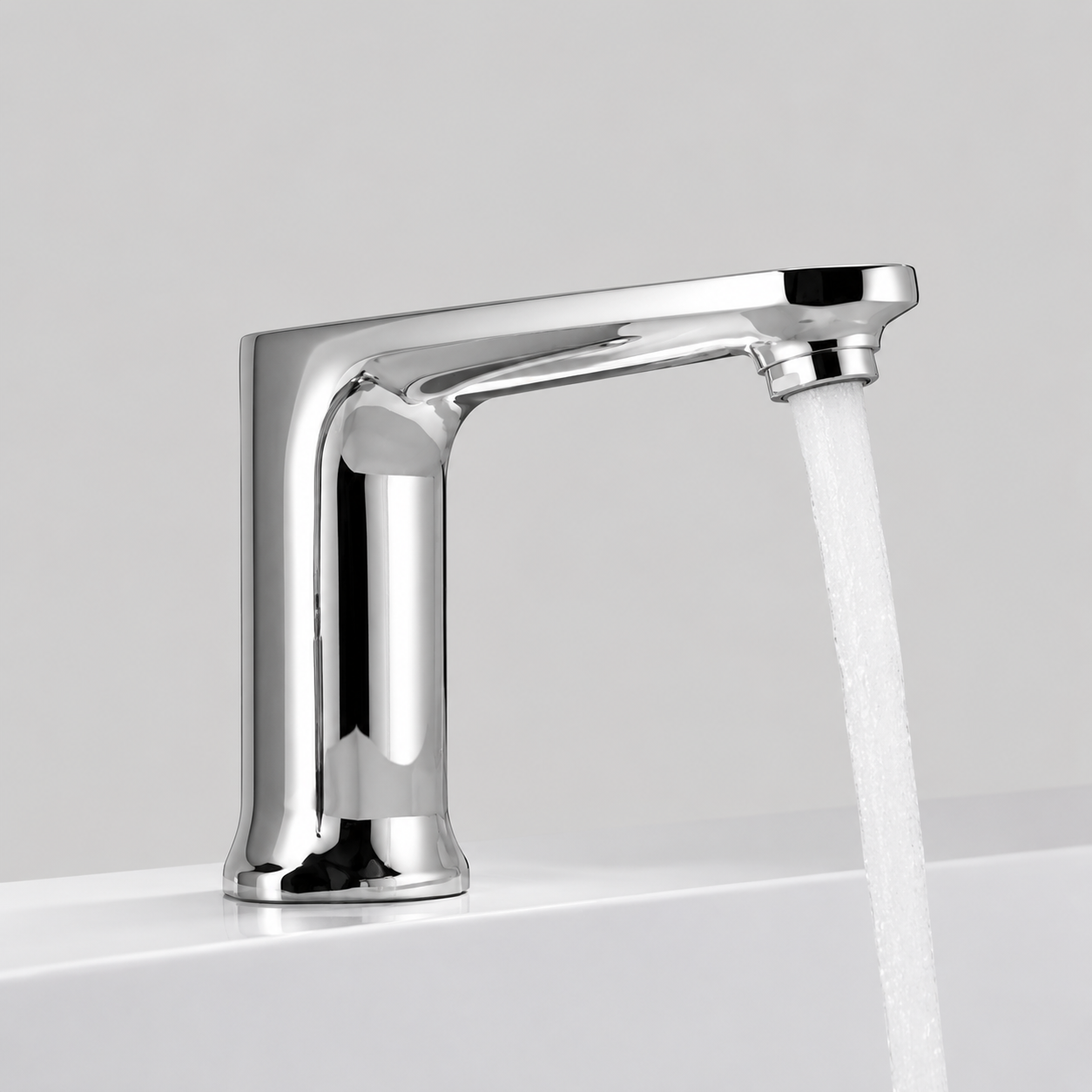
BathSelect Chrome Commercial Automatic Touchless Sensor Faucet
BathSelect’s chrome commercial platform can be specified with a 0.5 GPM outlet, making it a practical choice for high-traffic public bathrooms where efficiency and familiar stream performance both matter.
Its published commercial architecture also includes 200,000-cycle battery expectancy, a magnet-latching solenoid, 50-mesh filtration, AC/DC power and 2–6 inch infrared sensing.
0.5 GPM combines public-lavatory efficiency with straightforward commercial service architecture.
The standard outlet is higher flow; specify the 0.5 GPM option explicitly in procurement documents.
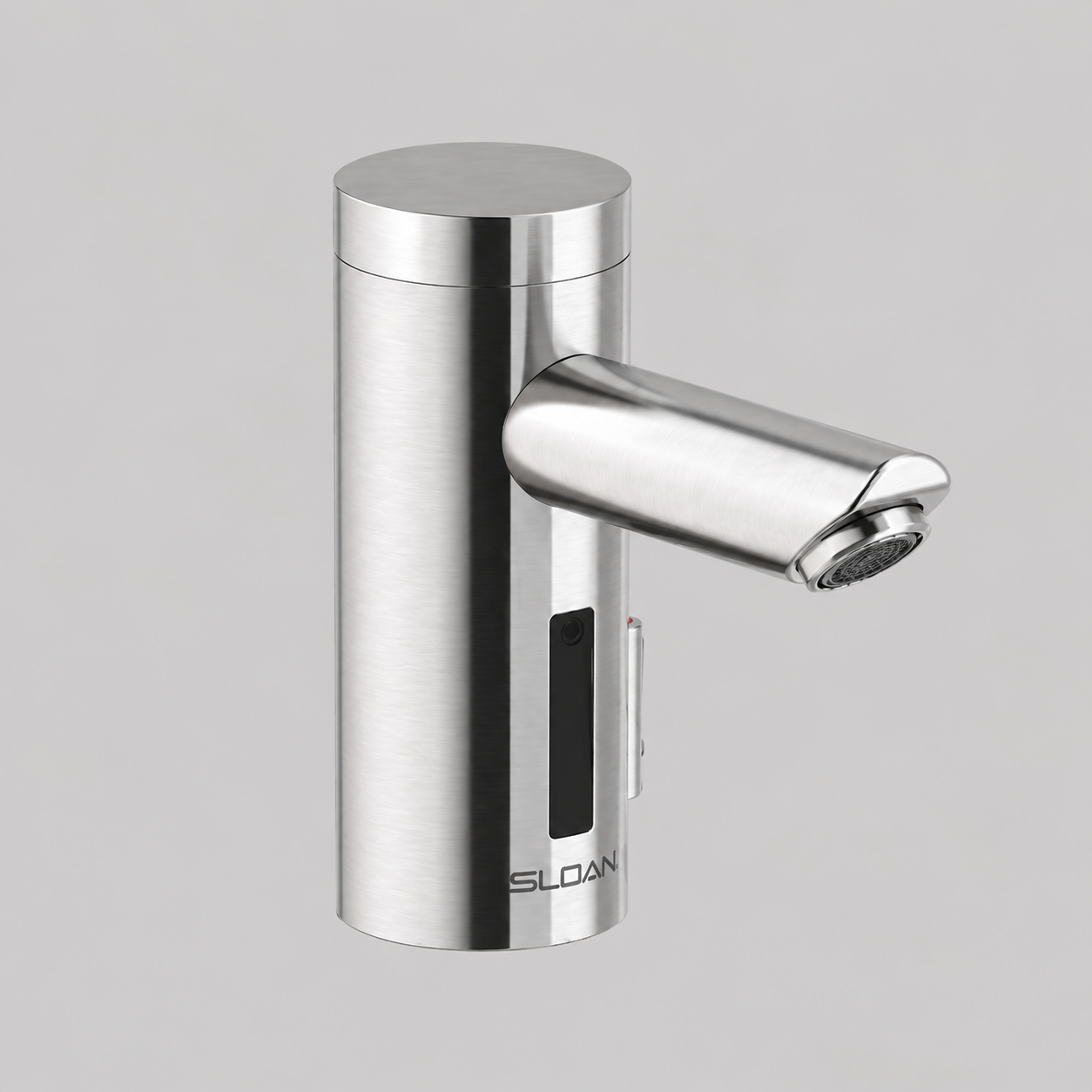
Sloan Optima® EAF-200 0.35 GPM Commercial Sensor Faucet
Sloan pairs its 0.35 GPM outlet with a multi-laminar spray rather than relying only on restriction. The goal is to distribute a small amount of water across a useful handwashing area.
The selected configuration also includes double infrared sensing with automatic setup, self-adapting sensor technology and an integrated side mixer.
Multi-laminar outlet engineering supports better perceived coverage at ultra-low flow.
0.35 GPM should be mocked up if users are accustomed to significantly higher flow rates.
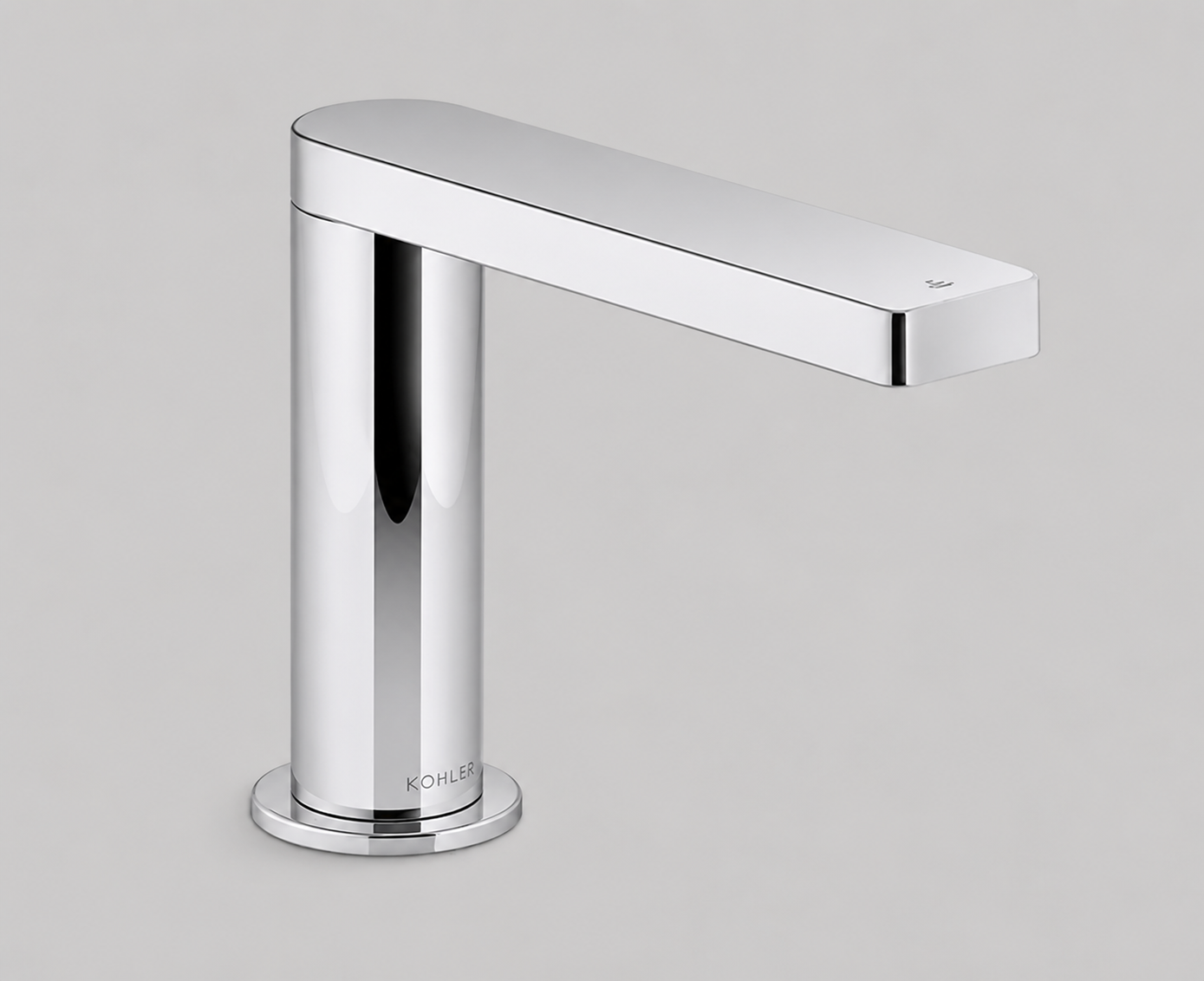
KOHLER Composed® Touchless Faucet with Kinesis® Sensor — 0.35 GPM
KOHLER proves that ultra-low-flow commercial faucets do not need to look institutional. Composed uses concealed Kinesis sensing, below-counter valving and a vandal-resistant 0.35 GPM outlet.
KOHLER explicitly positions the model around water savings and commercial design while maintaining a minimalist bathroom profile.
Strong choice when architectural design and aggressive water reduction carry equal weight.
Its 5-13/16-inch spout reach should be coordinated with the exact basin.
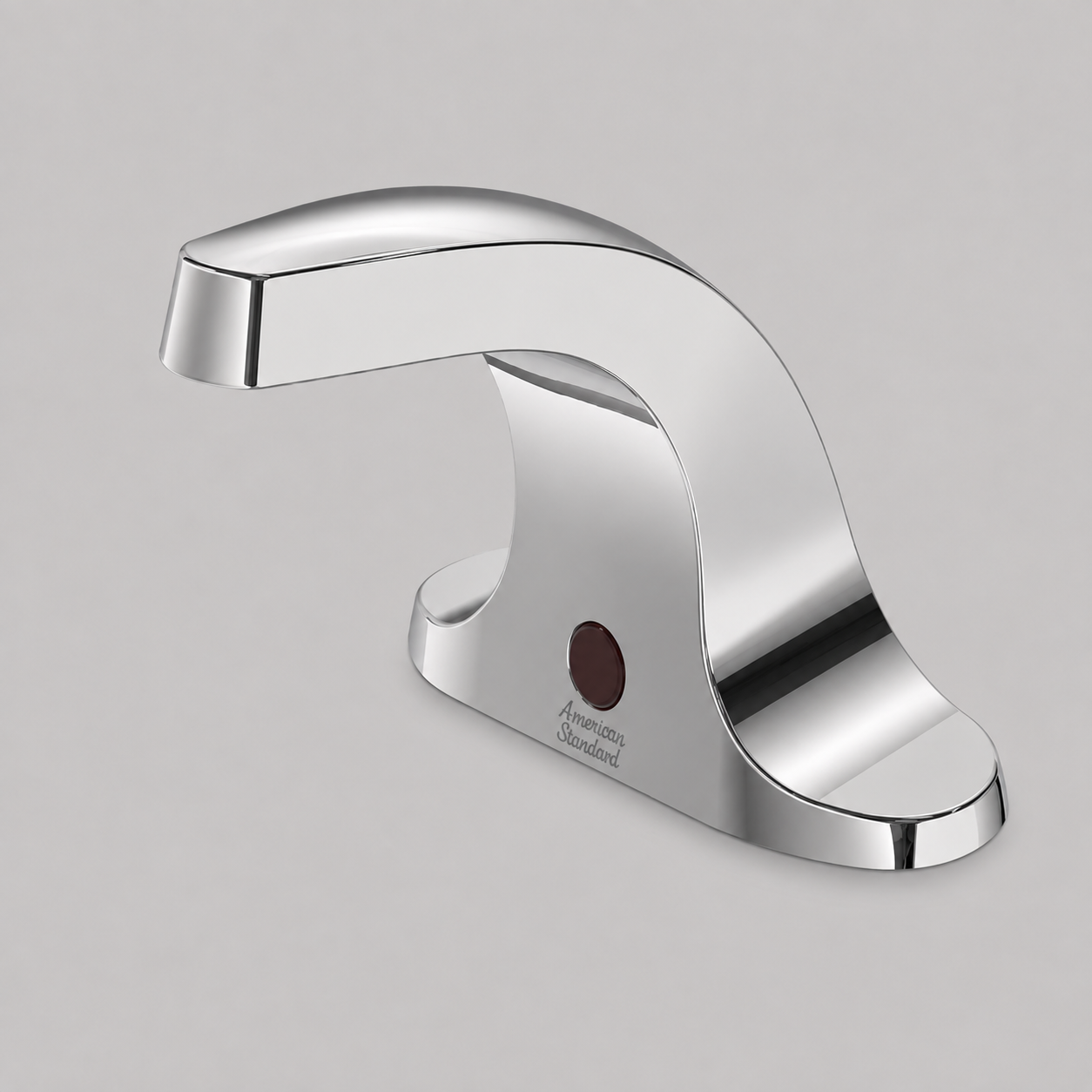
American Standard Innsbrook® Selectronic® 0.5 GPM Touchless Faucet
Innsbrook takes a modular commercial approach. The faucet body is specified together with the required control box and selected power architecture, allowing facilities to configure the same visual faucet around different project requirements.
Its 0.5 GPM platform is particularly appropriate where owners want efficient public-lavatory flow without moving to the more aggressive 0.35 GPM class.
0.5 GPM efficiency with a modular control architecture for commercial projects.
Control box and power supply are separate required system components.
Image standard: all featured product images are configured at 500+ px desktop width, remain uncropped, and each image links directly to the selected product page.
How Much Does 0.35 GPM Save?
At identical runtime, moving from 0.5 to 0.35 GPM reduces water volume by 30%.
| Runtime | 0.50 GPM | 0.35 GPM |
|---|---|---|
| 10 seconds | 0.083 gal | 0.058 gal |
| 20 seconds | 0.167 gal | 0.117 gal |
| 30 seconds | 0.250 gal | 0.175 gal |
At 1,000 twenty-second activations per day, the simplified difference is approximately 50 gallons per day, or more than 18,000 gallons annually.
Why 0.35 GPM Can Still Feel Effective
At ultra-low flow, outlet design becomes critical. Multi-laminar and carefully engineered laminar outlets distribute limited water across a wider useful washing zone instead of producing one narrow, weak stream.
This is why flow rate should always be reviewed together with the outlet type.
Which Flow Rate Should You Specify?
| Project Condition | Strong Starting Point |
|---|---|
| General commercial public restroom | 0.5 GPM |
| Airport or large campus | 0.35 GPM deserves serious evaluation |
| LEED / aggressive conservation target | 0.35 GPM |
| Premium bathroom with user-experience priority | 0.5 GPM or mock up 0.35 GPM |
| Shallow splash-sensitive basin | 0.35 GPM with controlled laminar delivery can help |
Low-Flow Touchless Bathroom Faucet Brands
0.35 vs. 0.5 GPM Faucet FAQ
Does 0.35 GPM use 30% less water than 0.5 GPM?
Yes, assuming both faucets operate for exactly the same amount of time.
Is 0.35 GPM enough for handwashing?
It can be when the outlet provides effective stream distribution and the basin is properly coordinated.
Is 0.5 GPM considered efficient?
Yes. EPA currently recommends 0.5 GPM or less for public lavatory faucets.
Why use a multi-laminar outlet?
It distributes a limited volume of water across a more useful handwashing area at low flow.
Does lower flow always reduce splash?
Not automatically. Spout height, angle, basin geometry and stream landing position also influence splash.
Should 0.35 GPM be mocked up?
For large or premium projects, yes. Test the exact faucet, basin and supply conditions before bulk procurement.
Professional Sources
U.S. EPA — Bathroom Faucet Efficiency
Public-lavatory water-efficiency guidance.
U.S. Green Building Council — LEED
Building water-efficiency framework for commercial projects.
American Society of Plumbing Engineers
Professional plumbing and fixture-engineering resources.
International Code Council
Model plumbing-code resources relevant to commercial lavatories.
ASME A112.18.1 / CSA B125.1
Plumbing-supply-fitting performance requirements used in commercial faucet specification.
0.5 GPM Is the Practical Baseline; 0.35 GPM Is the Optimization
For general public bathrooms, 0.5 GPM provides a strong balance between water conservation and familiar handwashing performance. Where fixture counts are high or aggressive water-reduction targets matter, 0.35 GPM can reduce water use another 30%—provided the faucet uses a well-engineered outlet and works with the actual basin. Fontana’s 0.35–0.5 GPM flexibility is especially useful where project teams want to evaluate both strategies within one commercial platform.
Review Fontana Glacier Series Low-Flow Faucet →Independent editorial disclosure: BathTouchlessFaucets.com provides independent engineering-oriented analysis. Actual water consumption depends on rated flow, runtime, pressure, sensing behavior, basin geometry and occupant use. Verify the exact selected outlet and current manufacturer specifications before procurement.
