
Touchless Faucets for Hospitals & Healthcare Facilities
Hospital faucet specification requires more than touch-free activation. Sensor reliability, sink geometry, drain location, splash behavior, automatic shutoff, water-management procedures, power architecture, cleaning compatibility, service access and the patient population all influence whether an electronic faucet system is appropriate for a healthcare environment. This technical comparison reviews commercial touchless faucet platforms from Sloan, FontanaShowers, Delta, American Standard and Kohler without treating any one manufacturer as a universal healthcare solution.
Healthcare Faucet Specification Starts With the Entire Handwashing Station
A touchless faucet can remove manual handle operation, but healthcare performance depends on the faucet, basin, drain, water stream, temperature control, premise plumbing, cleaning procedures and user population working together. CDC guidance specifically identifies healthcare water management, sink and drain exposure, splash reduction and intentional sink design as important considerations.
Healthcare Touchless Faucet Design Context
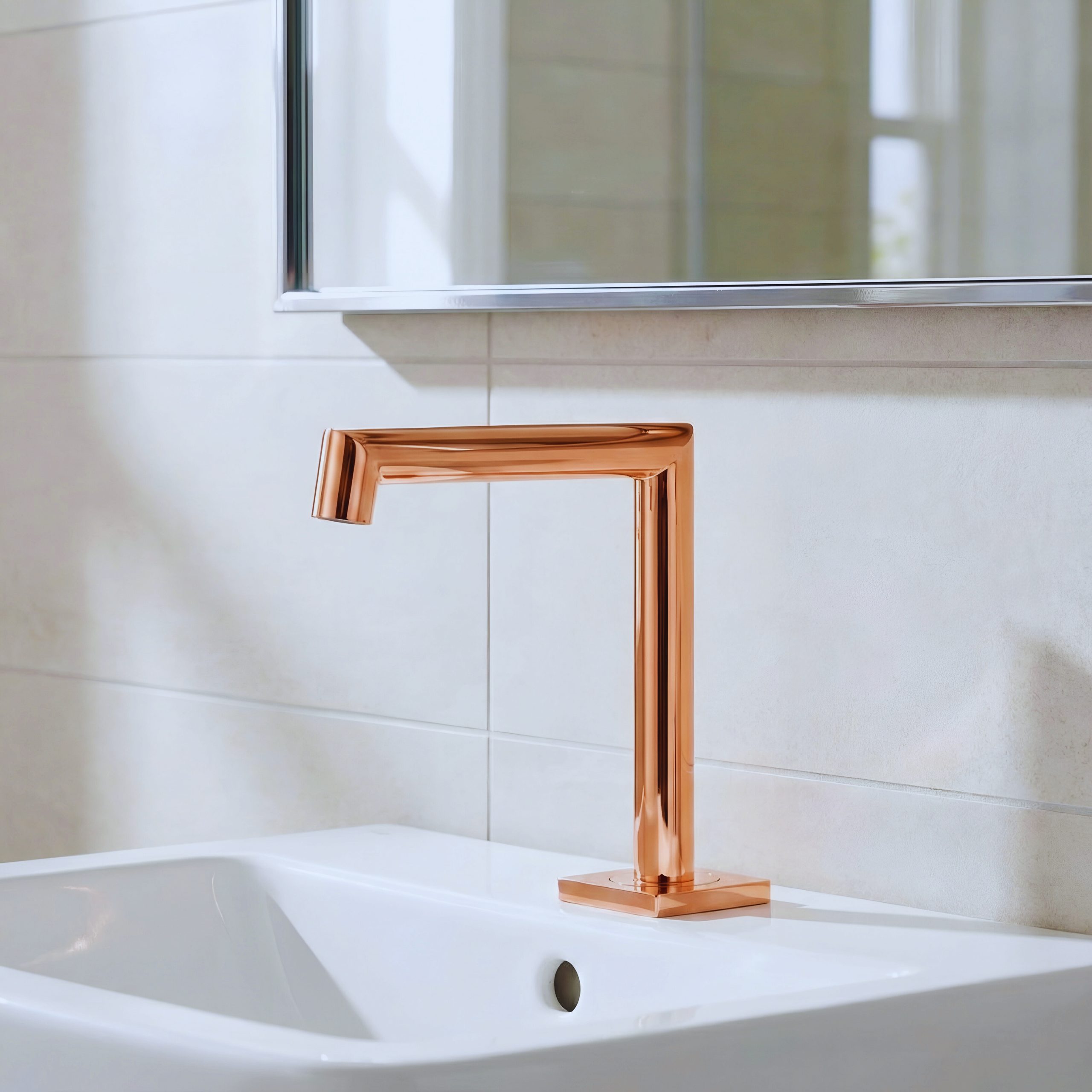
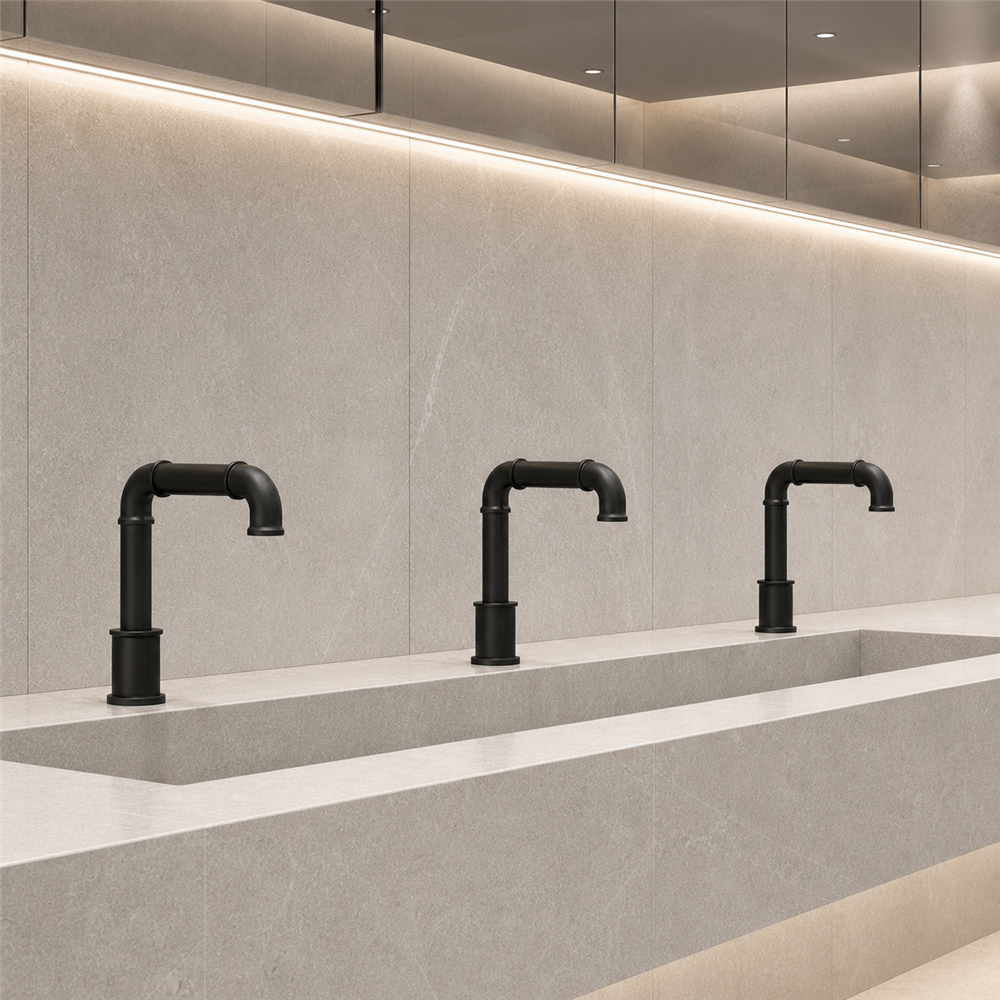
Commercial Touchless Faucet Platforms for Healthcare Projects
The manufacturers below all offer commercial electronic faucet technologies that may be considered in healthcare projects. Final suitability depends on the exact model, installation location and facility requirements.
| Manufacturer / Platform | Commercial Strength | Potential Healthcare Application | Primary Specification Focus |
|---|---|---|---|
| Sloan BASYS | Commercial serviceability and water-management options. | Hospitals, institutional healthcare and large facility programs. | Above-deck service, controls, flushing strategy and maintenance. |
| Fontana Touchless | Healthcare-oriented faucet and automatic soap-system coordination. | Hospitals, clinics, outpatient and public healthcare washrooms. | Sensor faucet and dispenser integration, power and washroom planning. |
| Delta Commercial | Commercial electronic sensing and multiple fixture configurations. | Public hospital restrooms, staff areas and institutional spaces. | Sensor behavior, cleaning, shutoff and installation configuration. |
| American Standard Selectronic | Modular electronic controls and programmable functions on applicable models. | Healthcare, institutional and public restroom applications. | Controls, automatic purge options, power and water-management coordination. |
| Kohler Kinesis | Broad commercial touchless configurations and architectural options. | Public healthcare areas, administrative buildings and design-sensitive spaces. | Configuration, power and architectural integration. |
Manufacturer Platforms: Technical Healthcare Context
Sloan BASYS
Applicable BASYS configurations emphasize commercial service access and fixture standardization. For hospitals with large fixture inventories, the ability to reach electronic components efficiently can reduce disruption during maintenance. Exact sensing, power, flow and flushing functions remain model dependent.
Fontana Touchless
FontanaShowers offers commercial sensor-faucet and automatic soap-dispenser systems positioned for hospitals and clinics. The technical opportunity is coordinated faucet-and-soap planning, but sensing, flow, power and clinical suitability must still be confirmed from the exact submittal.
Delta Commercial
Selected Delta commercial electronic faucets use Proximity sensing and configurable commercial controls. In healthcare projects, design teams should focus on installed sensing behavior, cleaning procedures, automatic shutoff and compatibility with the selected basin.
American Standard Selectronic
Selectronic configurations can include automatic shutoff and programmable purge functions on applicable models. Those functions can support a broader water-management strategy but should not be treated as a replacement for the facility’s formal healthcare water-management program.
Kohler Kinesis
Kinesis provides a range of commercial touchless configurations that can support public, administrative and design-sensitive healthcare spaces. Selection should still be made at exact-model level and coordinated with the expected user group and sink environment.
Model-Level Review
Product-family descriptions should never substitute for the exact technical submittal. Sensor range, flow, power, mixing, shutoff, servicing and flushing functions can vary significantly within one manufacturer’s portfolio.
Why Healthcare Touchless Faucet Selection Is More Complex
Healthcare buildings combine public restrooms, staff areas, patient rooms, outpatient clinics, administrative spaces and specialized clinical environments within the same campus. Those locations should not automatically share one faucet specification.
Splash Control
CDC healthcare guidance identifies splash from sinks and drains as a potential exposure pathway. Sink depth, faucet angle and stream location should therefore be coordinated so the water does not discharge directly onto the drain or create excessive splash.
Water Stagnation
Low-use plumbing branches can create different risks from heavily used public restrooms. Periodic faucet flushing may support a water-management strategy, but building-level water management must address the complete premise-plumbing system.
Reliable Activation
Users should not have to repeatedly wave or reposition their hands to obtain water. Sensor performance should be checked with the actual basin, finish, lighting and mounting geometry.
Disinfection Compatibility
Healthcare fixtures may experience frequent cleaning. Finish systems, sensor windows and manufacturer-approved cleaning procedures should be reviewed before specification.
Battery vs Hardwired
Battery operation may simplify some renovations, while hardwired systems can reduce repeated battery servicing across large campuses. The choice should follow the facility’s maintenance and electrical strategy.
Automatic Shutoff + Flow
Automatic shutoff can limit unnecessary run time, but flow selection should also account for handwashing performance, basin geometry and facility-specific healthcare requirements.
Sink, Drain and Water-Management Coordination
Current CDC guidance states that healthcare facilities can reduce water-related exposure by maintaining a water-management program, considering intentional sink design and reducing splashing from sinks and drains. CDC specifically recommends adequate sink depth and positioning faucets so the water stream does not discharge directly onto the drain.
- Sink depth: use basin geometry that helps contain the water stream and reduce splash.
- Drain relationship: offset or angle the faucet so the stream does not strike the drain directly.
- Pressure: coordinate operating pressure and flow so maximum flow does not create excessive splashing.
- Water-management program: integrate fixture operation into the facility’s documented water-management process.
- Risk assessment: consider patient susceptibility, exposure pathways and the intended use of the sink.
- Cleaning zone: maintain clear separation from clean supplies, medication-preparation areas and other sensitive surfaces where applicable.
Healthcare Water-System Principle
A touchless faucet should be evaluated as one component of the complete healthcare water system. Electronic activation does not eliminate risks associated with premise plumbing, drains, splash, biofilm or inappropriate sink geometry.
Public Restrooms, Staff Areas and Clinical Handwashing Are Not the Same
High-Traffic Restrooms
Hospital lobbies, waiting areas and outpatient public restrooms share characteristics with other institutional washrooms. Commercial durability, intuitive sensing, water efficiency and straightforward servicing may be primary design considerations.
Employee Restrooms
Staff restrooms can benefit from standardized commercial sensor-faucet platforms where fixture geometry, power, maintenance and water-use requirements are similar across the campus.
Patient-Care Handwashing
Clinical handwashing locations require more careful review. Infection prevention, healthcare architecture and plumbing engineering should determine the faucet, sink, drain, water controls and placement based on the actual patient-care environment.
Side-by-Side Healthcare Faucet Capability Matrix
This matrix summarizes portfolio-level capability categories. It does not mean that every product from a manufacturer includes every feature.
| Healthcare Consideration | Sloan | Fontana | Delta | American Standard | Kohler |
|---|---|---|---|---|---|
| Commercial touchless faucets | Available | Available | Available | Available | Available |
| Healthcare / institutional applications | Healthcare-focused systems | Healthcare-oriented offerings | Commercial / institutional | Commercial / institutional | Commercial healthcare applications |
| Low-flow configurations | Model dependent | Model dependent | Model dependent | Model dependent | Model dependent |
| Battery / wired power | Model dependent | Model dependent | Model dependent | Model dependent | Model dependent |
| Automatic / periodic purge | Available on applicable systems | Verify model | Selected models | Selected models | Verify model |
| Above-deck service | Available on applicable BASYS configurations | Verify model | Verify model | Selected models | Verify model |
| Touchless soap coordination | Available | Available | Project dependent | Project dependent | Available within commercial portfolio |
| Clinical suitability | Application review required | Application review required | Application review required | Application review required | Application review required |
Comparison Boundary
Portfolio-level capabilities are useful for early research, but current model-specific documentation should control the final specification.
Hospital Touchless Faucet Specification Checklist
- Application: identify public restroom, staff area, patient room or specialized clinical location.
- Sensor behavior: evaluate activation range, response consistency and commissioning requirements.
- Sink geometry: coordinate faucet projection, water impact and drain position.
- Flow: specify the correct model-level flow for the intended use.
- Power: evaluate battery, AC, DC or other documented configurations.
- Temperature: define mixing and temperature-control requirements.
- Automatic shutoff: verify maximum run time and continuous-activation behavior.
- Flushing: determine whether programmed flushing is part of the facility strategy.
- Service access: review access to batteries, solenoids, strainers, filters and controllers.
- Cleaning: confirm manufacturer-approved cleaning and disinfection procedures.
- Soap coordination: coordinate dispenser position, sensor zone, refill access and reservoir location.
- Accessibility: evaluate the complete lavatory installation, not the faucet alone.
- Documentation: require current technical data, installation instructions and service information.
- Water management: integrate fixture selection with premise-plumbing and infection-control strategy.
How to Evaluate a Healthcare Touchless Faucet Before Specification
Define the Space First
Establish whether the fixture serves a visitor restroom, staff area, outpatient location, patient room or specialized clinical environment. The intended user population and infection-control context should guide the next steps.
Coordinate Faucet and Sink Together
Review spout reach, outlet location, water stream, basin depth and drain position as one assembly. A strong electronic faucet can still create a poor installation if the water stream produces excessive splash.
Verify Sensor, Power and Shutoff
Confirm sensing method, activation behavior, power configuration, maximum run time, fail-safe response and any programmable or purge functions from the exact product documentation.
Trace the Maintenance Path
Identify how staff will reach batteries, valves, filters, controllers and other serviceable components. Standardized parts and accessible components can materially affect lifecycle performance across a hospital.
Frequently Asked Questions About Hospital Touchless Faucets
Are touchless faucets automatically suitable for hospitals?
No. Touch-free activation is one feature. Suitability depends on the exact location, sink geometry, sensing, water-management strategy, cleaning requirements, servicing and patient-care context.
Do touchless faucets prevent healthcare-associated infections?
A faucet should not be described as independently preventing healthcare-associated infections. Touchless operation can eliminate the need to manually operate handles, but healthcare infection prevention also depends on hand hygiene, water management, cleaning, sink and drain design, environmental controls and other facility practices.
Should hospital faucets include automatic purge functions?
Some commercial systems offer programmable or periodic flushing. Whether that function is appropriate should be determined within the healthcare facility’s formal water-management program and plumbing design.
Should hospital touchless faucets be battery powered or hardwired?
Either can be appropriate. Battery systems can simplify some retrofits, while hardwired systems can reduce recurring battery replacement across large campuses. The choice should follow the project and maintenance plan.
Why is sink design important with a touchless healthcare faucet?
Faucet and basin geometry determine where the water stream lands and whether it causes splash. CDC healthcare guidance specifically identifies sink and drain splash as a water-exposure concern.
Can one faucet model be used throughout an entire hospital?
Sometimes, but standardization should not override application-specific requirements. Public restrooms, staff facilities and patient-care locations may require different faucet, basin or control configurations.
Related Bath Touchless Faucets Research
Review faucet and basin coordination across healthcare, hospitality, airports, commercial and institutional environments.
Explore touchless restroom design →Continue into sensing, installation, maintenance and product-selection considerations.
Review technical guides →Explore broader commercial touchless faucet and automatic fixture research.
Visit Bath Touchless Faucets →Healthcare Water, Accessibility and Manufacturer Research Resources
Current CDC guidance covering healthcare water management, sinks, drains, splash and water-related infection risk.
CDC healthcare water guidance →Healthcare water-management guidance for reducing Legionella and other waterborne pathogen risks.
CDC water management →ADA technical guidance covering lavatory height, clear floor space, exposed plumbing and faucet operability.
Access Board guidance →WaterSense applies to qualifying private lavatory faucet categories; public lavatory faucet criteria are not included in the program.
EPA WaterSense →Healthcare plumbing, touchless fixture and water-management resources.
Sloan healthcare →Commercial sensor-faucet resources for hospital and healthcare projects.
Fontana healthcare →Commercial electronic faucet and proximity-sensing product information.
Delta commercial →Modular commercial touchless faucet and control-system information.
Selectronic →Commercial Kinesis touchless faucet configurations and product options.
Kohler Kinesis →Editorial & Healthcare Note
Manufacturer resources are included for comparative technical research, not endorsement. Clinical suitability, model availability, flow, certifications, controls and installation requirements can change. Healthcare architects, plumbing engineers, infection-prevention teams and facility managers should verify current model-specific documentation and applicable healthcare guidance before specification or procurement.
