Check three things before you buy a touchless bathroom faucet: how it’s powered, how far its sensor reaches and under what conditions it fires, and whether it has a manual backup for when the electronics fail. Get those three wrong and you’ll be replacing batteries monthly, fighting phantom activations, or standing in a bathroom with no working faucet and no way to turn it on. Everything else on the spec sheet is secondary.
Battery vs AC-Powered: What Fits Your Bathroom
Touchless faucets run on one of three setups: AA batteries, a plug-in AC adapter, or a combination with battery backup for power outages. Each has a real tradeoff, not a marketing distinction.
Battery-only units are the easiest retrofit since there’s no wiring involved, but expect to replace 4 to 6 AA batteries every 6 to 12 months depending on household traffic. A single-user guest bath might stretch past a year; a family bathroom with four people brushing teeth and washing hands all day will land on the shorter end, sometimes sooner if the sensor has a high false-trigger rate (more on that below). AC-powered units need an outlet or hardwired low-voltage connection under the sink, which means the bathroom needs to be plumbed for it or you’re running an extension cord, which you shouldn’t do. Combination units cost more upfront but keep the faucet running during a power outage without you digging through a junk drawer for batteries at 6 a.m.
For a family bathroom, battery life matters more than it does for a powder room. If you’re buying for a high-traffic space, ask the retailer or spec sheet for the battery life rating in cycles, not just months, since “months” assumes an average use pattern that doesn’t match a family of five.
Sensor Range and False Trigger Causes
Most residential touchless faucets use infrared sensors with a detection range of 4 to 6 inches. That range is a deliberate design choice: short enough to avoid tripping when someone walks past the sink, long enough that hands don’t have to hover awkwardly close to the spout. Anything advertised with a significantly longer range is more prone to false triggers in a home setting, not less convenient.
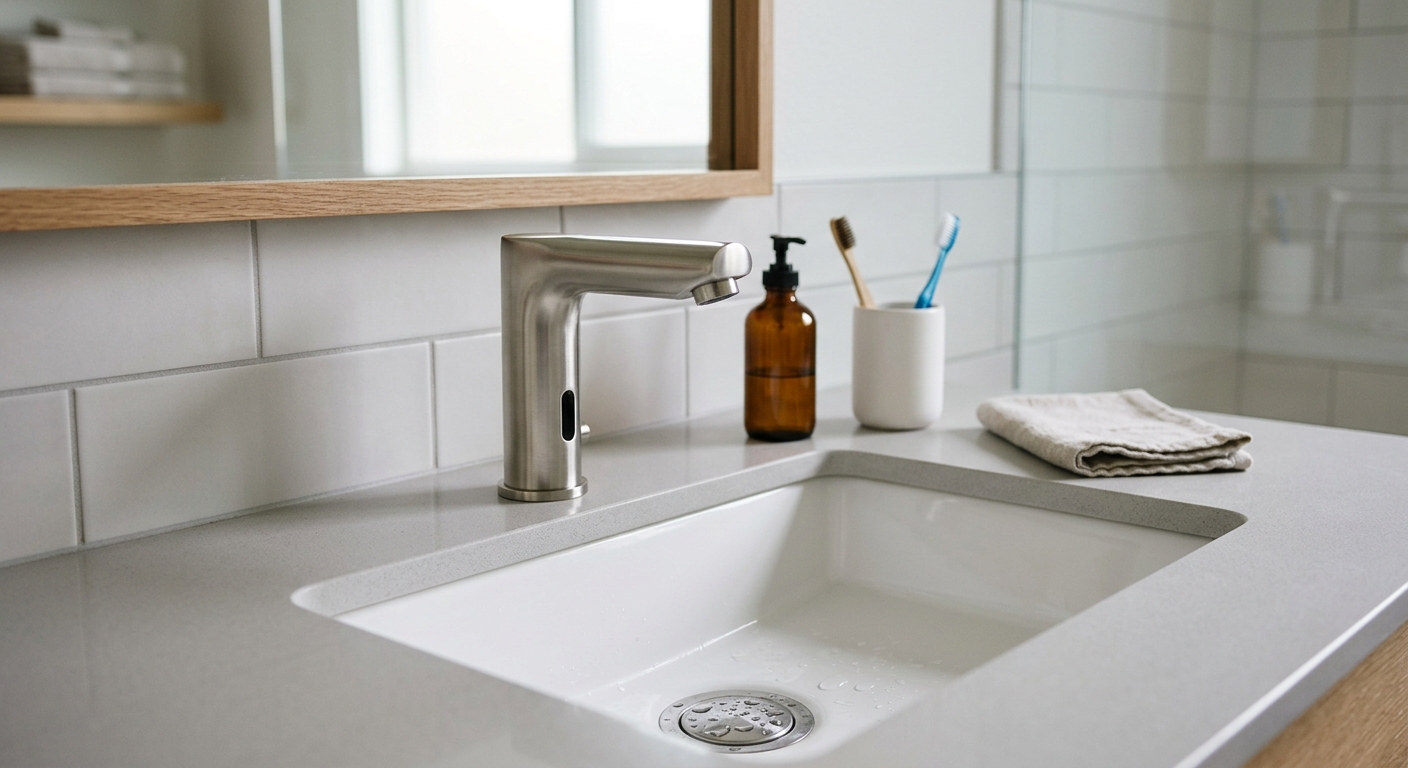
False triggers come from three sources: reflective surfaces near the sensor (a mirror, a chrome soap dispenser, a glossy countertop), ambient light interference from a window or vanity light hitting the sensor at the wrong angle, and objects left in range, like a toothbrush holder or a stack of hand towels sitting too close to the spout. None of these are faucet defects. They’re installation and placement issues, and they’re worth walking through before you mount anything permanently.
If you’re comparing models, ask what sensor technology they use. Infrared is standard and cheap to service. Some higher-end units use capacitive or dual-sensor systems that claim better false-trigger resistance, but for a standard family bathroom, a well-placed infrared sensor with correct range is usually enough.
Kid and Pet Behavior That Trips Sensors
This is the failure point most buying guides skip, and it’s the one that actually determines whether you’re happy with the faucet in six months.
- Kids testing the sensor on purpose. Younger children treat a touchless faucet like a toy. Expect repeated on-off cycling, which shortens battery life faster than normal hand-washing use and adds wear to the solenoid valve.
- Height mismatches. A sensor calibrated for adult hand position may not reliably trigger for a small child’s hands, or it may trigger on their face or hair if they lean in close to the spout.
- Pets drinking from the sink. A dog or cat nosing the bowl can trigger the sensor repeatedly, run water unsupervised, and in some cases trip a faucet with a short auto-shutoff timer, leading to repeated restarts.
- Dropped items in the sensor field. A fallen hairbrush, toy, or washcloth sitting in range can cause continuous water flow until someone notices.
None of these are reasons to avoid a touchless faucet in a family bathroom. They’re reasons to check the auto-shutoff timeout spec (most residential units cut off between 30 seconds and a few minutes of continuous flow) and to think about mounting height and counter clearance before installation, not after.
Backup Manual Override Options to Check
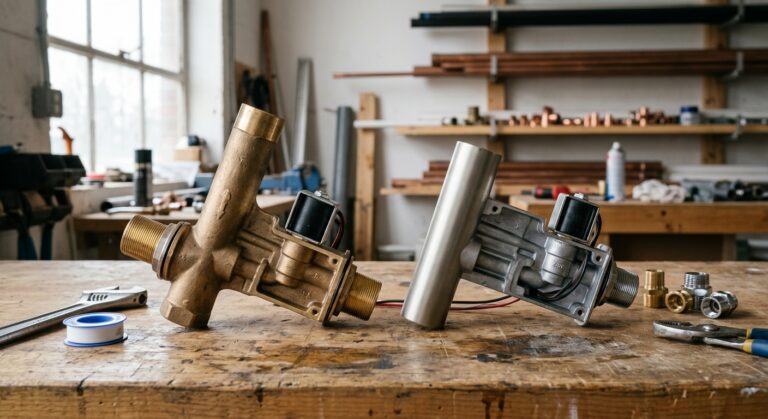
Every touchless faucet should have some way to run water without the sensor, whether that’s a manual override lever, a mechanical mixing valve behind the spout, or a hybrid design with a handle for temperature and volume plus sensor-only on/off. This matters for two reasons: batteries die without warning, and sensors occasionally need a hard reset or service.
If a model has no manual override at all, treat that as a disqualifier for a primary family bathroom, not a minor inconvenience. You want a faucet that still functions, even in a reduced capacity, the morning the batteries die before anyone’s had coffee. When you’re looking at product listings, lines like touchless bathroom faucets that specify both the sensor type and a manual backup method are giving you the information you actually need to compare, as opposed to listings that only mention “hands-free operation” and leave out what happens when the electronics aren’t working.
Also confirm the aerator flow rate. Most touchless bathroom faucets ship with a 1.5 gpm aerator, which is below the federal 2.5 gpm cap for showerheads (not directly comparable, but useful context) and in line with standard low-flow bathroom faucet aerators generally. A 1.5 gpm rating is normal and not a sign of a weak faucet; it’s the standard for this fixture category.
Questions to Ask Before You Buy
| Question | Why it matters |
|---|---|
| Is it battery, AC, or hybrid powered? | Determines maintenance frequency and outage behavior |
| What’s the rated battery life in months or cycles? | High-traffic family bathrooms drain batteries faster than the listed average |
| What’s the sensor range? | 4 to 6 inches is standard; longer ranges increase false-trigger risk |
| Is there a manual override or mixing valve? | Keeps the faucet usable when batteries die or the sensor needs service |
| What’s the auto-shutoff timeout? | Limits water waste from pets, toys, or objects left in sensor range |
| What’s the aerator flow rate? | 1.5 gpm is standard for touchless bathroom faucets |
Before you install anything, run the faucet near a mirror, under your actual vanity lighting, and near where towels or a soap dispenser will sit. That ten-minute test catches most false-trigger problems before they become a daily annoyance. If the bathroom isn’t already wired for an AC-powered unit and you want one, call an electrician to check outlet placement under the sink before you buy, not after. And if you’re replacing an existing faucet, confirm the supply lines are standard 1/2 inch NPT connections so the swap doesn’t turn into a plumbing project you didn’t plan for.